The World Changed. Garden Design Has To Change With It.
We were warned. We had the dates, the charts, the summits. We just didn't expect it to arrive quite this fast.
Published July 2026 · Dreamscape Gardens · Community & Climate
We Are Living in the Future They Warned Us About
Cast your mind back twenty years. The scientists showed up at conferences with projections. The charts had dates on them — 2040, 2050, "if we don't act before then." Politicians made pledges. Agreements were signed in glass buildings. And most of us, if we're honest, filed it somewhere between "important" and "someone smarter is handling it."
It is 2026. Look outside...
This summer, mega fires burned across three continents simultaneously. Rivers that have flowed for thousands of years ran dry. Cities that were never designed for heat recorded midnight temperatures above 35 degrees — not because the sun was still up, but because the concrete absorbed it all day and had nowhere to put it. Weather records that were only set last summer were broken again this summer. The scientists aren't showing us projections anymore. They're describing what is happening right now.
2050 didn't wait for 2050.
And here is what makes this both devastating and — if you look at it a certain way — galvanising: the people who hold a significant part of the solution are gardeners. Landscape designers. Horticulturalists. Urban greening specialists. The people who understand, at a biological and ecological level, what the earth actually needs. Not the politicians. Not the tech giants. The people with soil under their fingernails.
If that is you — or if you want it to be — keep reading.
How We Got Here: The Concrete Mistake
There is no point pretending this didn't happen. For decades, urban development made a series of choices that seemed rational at the time and are costing us enormously now.
Concrete was cheap, durable, and fast to build with. It was also a perfect heat trap — absorbing solar energy through the day and radiating it back at night, creating urban heat islands that push city temperatures several degrees above the surrounding countryside. Monoculture planting in public spaces — the same three species repeated everywhere — gutted insect biodiversity. Drainage systems designed to move water away as fast as possible removed the natural absorption that forests and soil provide. Green space was treated as decorative, a luxury afterthought, something you added once everything else was in place if the budget allowed.
The budget rarely allowed.
The result is that many of Europe's cities are functionally hostile environments in a warming climate. No shade. No cooling corridors. No biodiversity. No resilience.
The landscape and urban design professions have had to face something uncomfortable: many of the choices made in the name of progress were wrong. Not maliciously wrong — the science wasn't fully understood, the timelines weren't clear, the economics pushed in one direction. But wrong nonetheless, and the consequences are visible right now in the heat maps and flood reports and wildfire perimeters that appear on the news every week.
The good news — and this is real, concrete good news — is that the mistakes are fixable. Green infrastructure works. Urban trees provide measurable cooling. Biodiverse planting supports insect populations that the food chain depends on. Green corridors allow species to move through urban environments. Permeable surfaces manage water. Rooftop and balcony gardens reduce building temperatures. Every single one of these interventions is within reach. Most of them are within reach of individuals, not just governments.
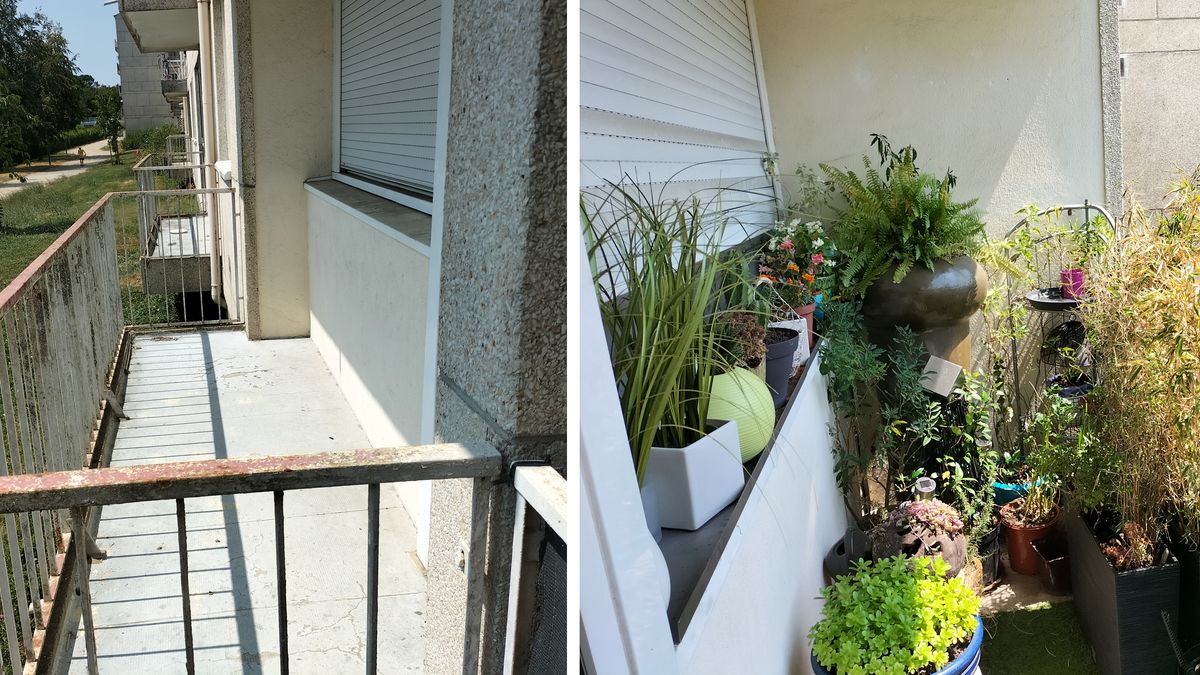
Start Where You Are: The Case for the Balcony Garden
You don't have to be a landscape professional to act. You don't need a garden. You don't need planning permission, a committee vote, or a significant budget.
You need a balcony and three pots.
Think about what happened in your building last summer. The heat that built through July and August and didn't let up at night. The surface temperatures on concrete and tarmac that made the city feel like a radiator. The complete absence of anything alive between you and the sky.
That six-square-metre balcony is yours to transform right now, today, this weekend.
Start with three pots. Put something that climbs on the railing side — a jasmine, a clematis, a passion flower if your climate allows. Put something aromatic in the centre — lavender, rosemary, salvias. Put something edible in the corner — tomatoes, courgettes, herbs you'll actually use. Water them in the morning. Then watch what happens.
Within two weeks, you will find yourself checking on them before you do anything else. Within a month, an insect will arrive — a bee, a hoverfly, a butterfly passing through on its way somewhere. Then a bird will land. You will leave out a small dish of water and it will come back. In the middle of a city. On a concrete tower. On your balcony.
And then your neighbour will notice.
This is not a small thing. This is how change actually moves — not through policy documents but through demonstration. One transformed balcony is visible to every neighbour above, below, and beside it. If you grow something beautiful, someone will ask you how you did it. If you give them a cutting, they'll start. If enough people on one building do it, the building changes character entirely — from a concrete cage into something living, something that manages heat, supports insects, and looks completely different from the street.
You don't have to wait for a developer to build you the green building of tomorrow. You can build it yourself, floor by floor, pot by pot, starting this weekend.
And if your building doesn't have an active housing association, start one. Propose a collective plant fund — even five euros per apartment buys seeds and compost. Organise a cutting swap in the car park. Put a shelf near the entrance where people can leave and take plants. Turn the management meeting nobody wants to attend into the meeting where the building becomes worth living in.
The 2.0 Garden Designers: You Were Trained for Exactly This Moment
If you are a landscape designer, a horticulturalist, an urban greening specialist, or a student in any of these fields — this section is for you specifically.
You know things that most people don't know.
You know which plants cool most effectively in an urban environment. You know how to design drainage that absorbs rather than deflects. You know which species support the most insect life, how to create biodiversity corridors in constrained spaces, how to design green roofs that actually function rather than just look good in a brochure. You know the difference between a garden that performs ecologically and a garden that just photographs well for Instagram.
You were taught this. It is in your hands and your head. The knowledge is there.
What has historically been missing is the infrastructure to turn that knowledge into a sustainable professional practice without losing years to administrative chaos. The invoicing, the client management, the project tracking, the brief documents, the pitch presentations — all the backend machinery that a professional business requires but that nobody teaches you in a horticulture degree.
That is the gap Dreamscape Gardens was built to fill.
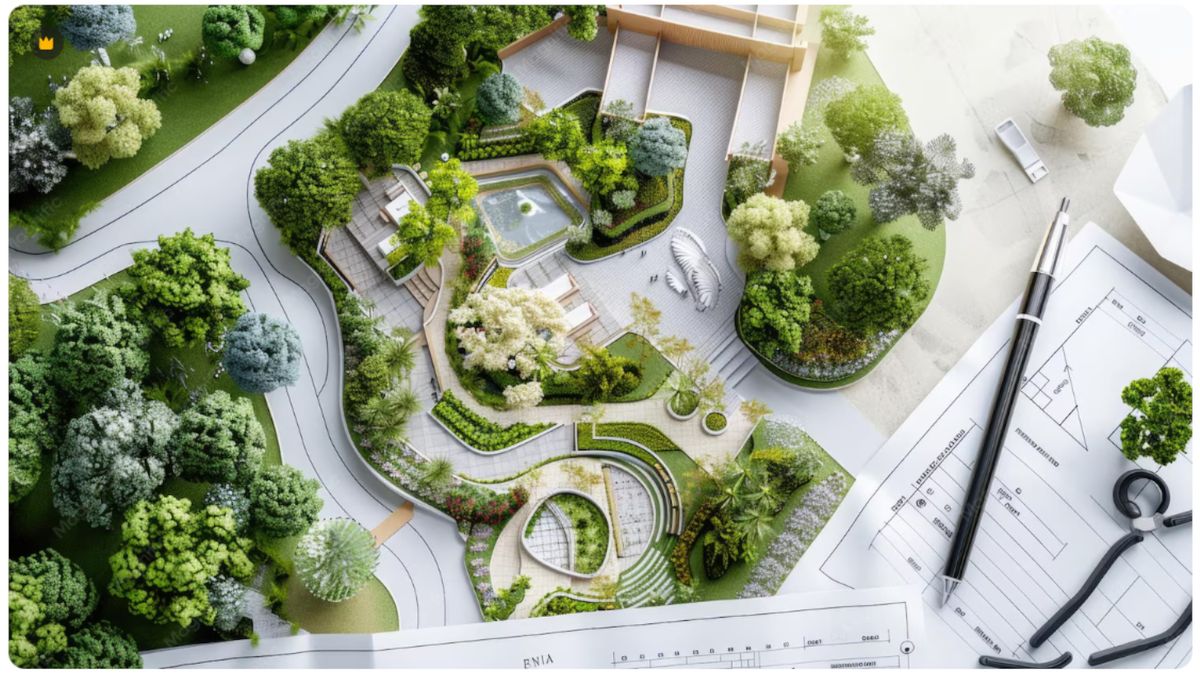
Dreamscape Gardens: Built for This Moment
Dreamscape Gardens is a professional platform for landscape designers, garden architects, and anyone building a career in the green space industry. It was built from the ground up because we kept asking the same question: why do the people who know how to fix the climate have the least support to build a viable business doing it?
Here is what the platform gives you:
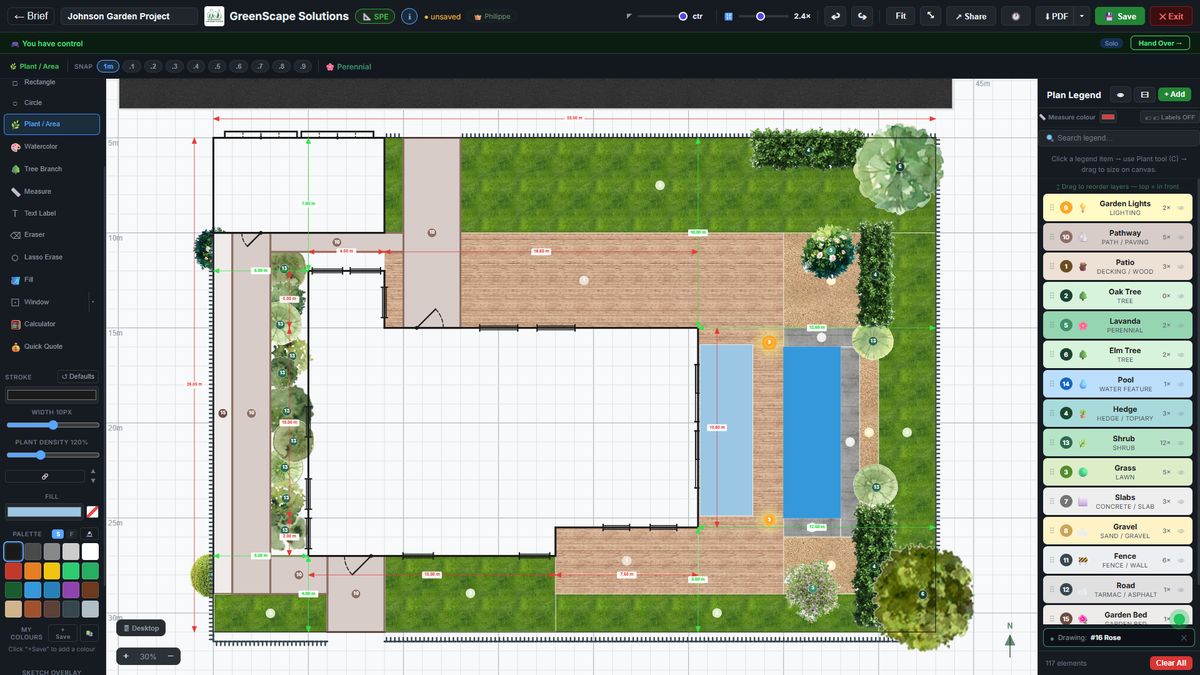
Design tools that match your ambition. A Sketch Plan CAD editor that lets you draw professional floor plans on a tablet during a site visit. A full 2D garden designer with real-world plant dimensions. A 3D visualiser that generates a photorealistic render of your design with a single click. A before-and-after composer that overlays your design onto a real photo of the client's garden so they can see exactly what they are commissioning.
Client management that doesn't eat your week. A shared brief system where you and your client build the project specification together via a shared link — every update timestamped, no more WhatsApp threads trying to track the latest version. A pitch deck generator that creates a professional PDF combining your renders, plant list, mood board, and pricing in minutes.
AI that works with you, not just for you. Not a chatbot you ask about the weather. A data-driven AI layer that monitors your business, learns patterns, surfaces the things that need your attention, and handles the briefing and admin layer so you can concentrate on design. The technology era and the oldest profession in the world — this is the platform that builds the bridge between them.
A community that shares your values. A blog, a portfolio showcase, a knowledge base, a place to post about what you're seeing in the field, what's working, what clients are asking for, what the profession needs to become. A community of gardeners, designers, landscapers, and concerned citizens who believe that green space is not decoration — it is infrastructure.
From 2026 to 2050 — If We Make It
We are going to say something that most platforms won't say: we don't know if we make it to 2050 in good shape. The trajectory is not comfortable. The speed of what is happening is faster than the projections suggested, and the political will to match it remains inconsistent.
But we do know this: the choice between acting and not acting is not neutral. Every biodiverse garden planted in an urban environment is a measurable contribution. Every green corridor created through a neighbourhood is real. Every building whose balconies start growing things is a building that radiates less heat at night. These things are not symbolic — they are functional, quantifiable, and cumulative.
And every young landscape professional who builds a viable, sustainable practice — who has the tools to run a real business without burning out in the first two years — is a person who plants more gardens, designs more green spaces, and trains the next generation with the right priorities.
This is the period that matters. Not 2050. Now. The decisions made in the next five to ten years about how cities are designed, how green space is valued, and how the landscape profession organises itself will determine what 2050 looks like.
Dreamscape Gardens exists for this window. The platform from 2026 to wherever we get to — the one that supports the gardeners who are building the world we want to live in.
Join Us
If you are a landscape professional, a garden designer, a horticulturalist, or a student working toward any of these — create your account. The platform has a free tier to start, and everything you need to run a serious professional practice at the Pro and Business levels.
If you are someone who cares about what is happening to the planet and wants to connect with people who are doing something real about it — join the community. Read the blog. Share your garden. Ask questions. Post about what you are seeing in your neighbourhood. The community is for everyone, not just professionals.
If you have a bare balcony — start this weekend. Three pots. We are serious. Come back and share a photo when something grows.
The future of garden design is not coming. It is being built right now, by the people reading this.
Share this article if it reached you. Tag a gardener, a landscaper, a designer, or anyone with a balcony and a bit of outdoor space. The more people who read this, the more pots get planted. That is not nothing.
Dreamscape Gardens — the platform for the gardeners who build tomorrow.Join Dreamscape Gardens →