From 40°C to -4°C — Can Your Succulent Champions Survive a European Winter?
This summer our terraces hit 40°C and more — from Brittany to Bavaria to Andalucia. Pots baked. Soil cracked. And these three? They thrived.
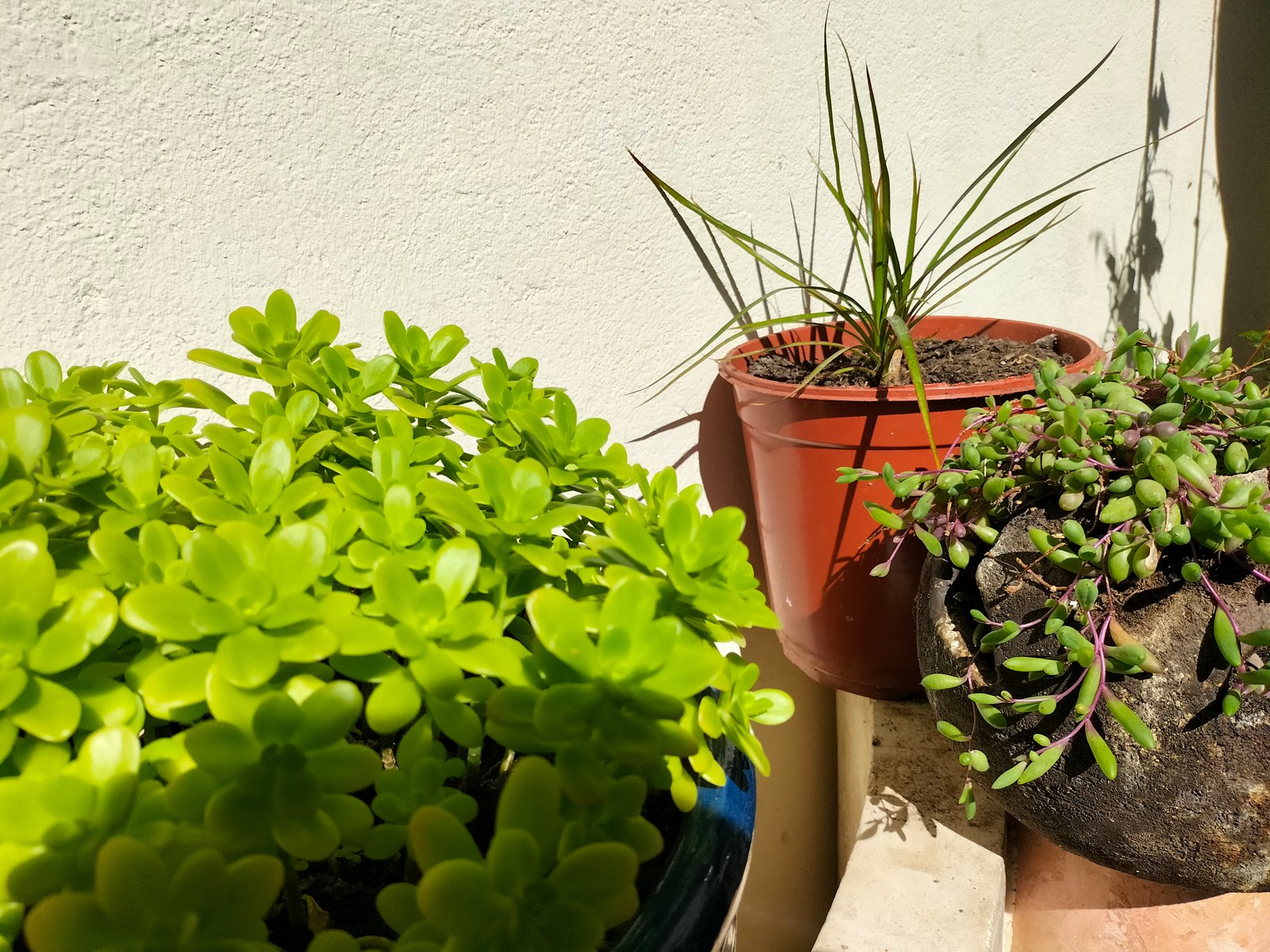
Left: Sedum makinoi 'Ogon' - Golden Japanese Stonecrop - neon lime, impossible to kill in heat.
Right: Othonna capensis 'Ruby Necklace' - green beans on purple strings, sun-chasing trailer.
Center-back: Dracaena marginata - the spiky architectural touch.
They are summer champions. But across Europe, the next challenge is the same whether you're in Ireland, the Netherlands, Poland, northern Italy or Spain's meseta: frost.
So, will they survive -4°C?
It depends on which champion, and how you grow it.
1. Sedum 'Ogon' — The Hardy One
Hardy to -10°C / -15°C in the ground in most of Europe (Zones 7-9). In a pot, it's less hardy — roots freeze faster. At -4°C it WILL survive if you keep it dry. Wet soil + frost is what kills it, not the cold itself.
2. Ruby Necklace — The Tender Trailer
Hardy only to 0°C. One night at -4°C and those plump leaves freeze, turn translucent, then black. This is a Mediterranean / South African plant. Everywhere in Europe north of the olive line, it must overwinter inside.
3. Dracaena — The Indoor Tropical
No frost at all. Bring in when nights drop below 7°C. It will happily winter in a bright hallway.
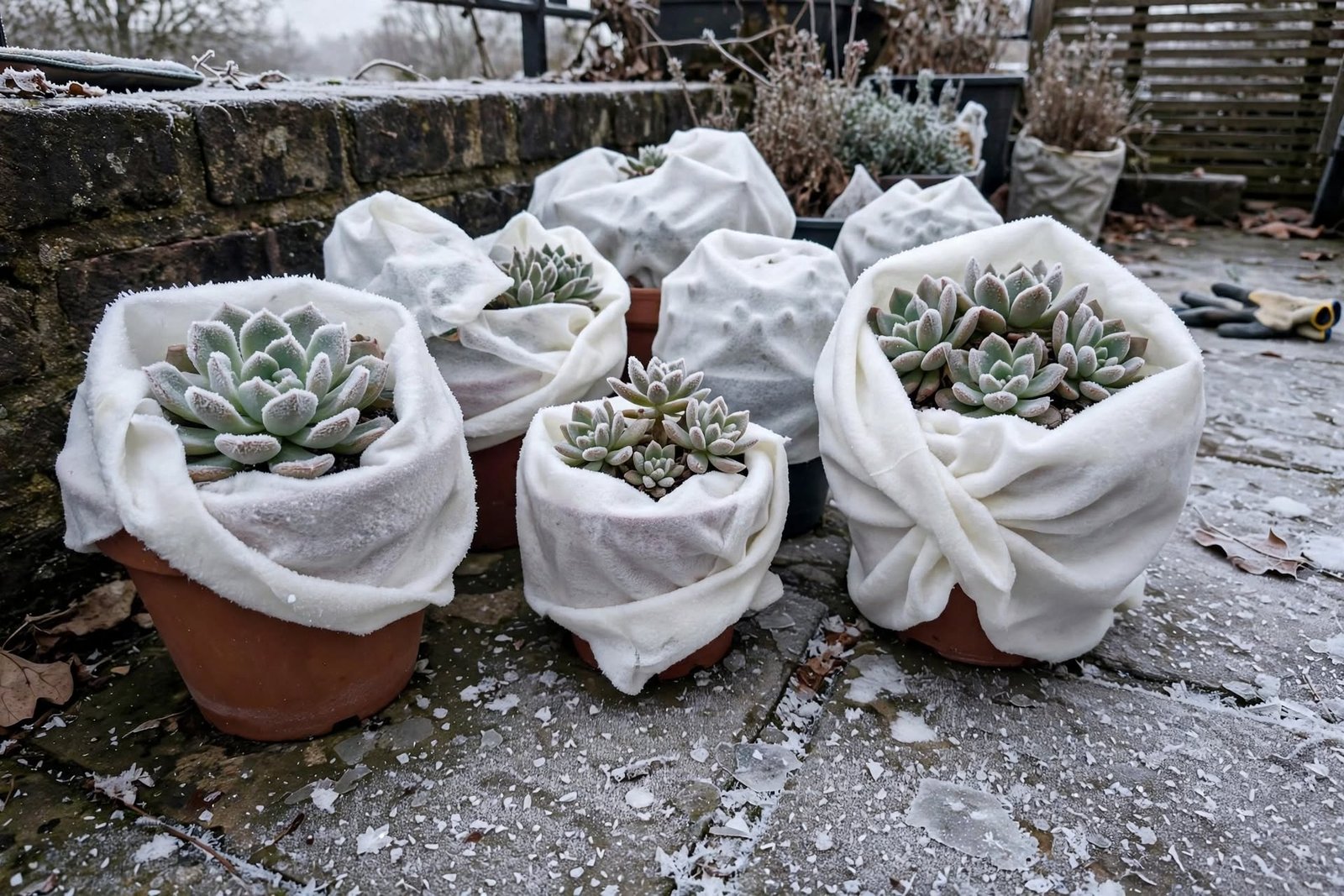
How to help your Succulents over winter — 4 Proven Solutions
A) The Move-Inside Method — Best for all tender succulents
The #1 method from Portugal to Sweden. Before first frost, move to your brightest windowsill, unheated stairwell, or conservatory. Cool is better than warm: 10-15°C is ideal. Stop watering. From November to March, give only a tiny sip once a month. This is how collectors in Germany, UK and Scandinavia keep their collections for decades.
B) The Fleece Wrap — Best for hardy Sedums in pots
Don't use plastic sheeting — it traps condensation and causes rot on sunny winter days. Use P30 horticultural fleece / voile d'hivernage / Vlies. Wrap the POT, not just the plant. Lift pots off the ground with pot feet or wood. Tuck them against a south-facing wall under the eaves. Works from Atlantic to Continental climates.
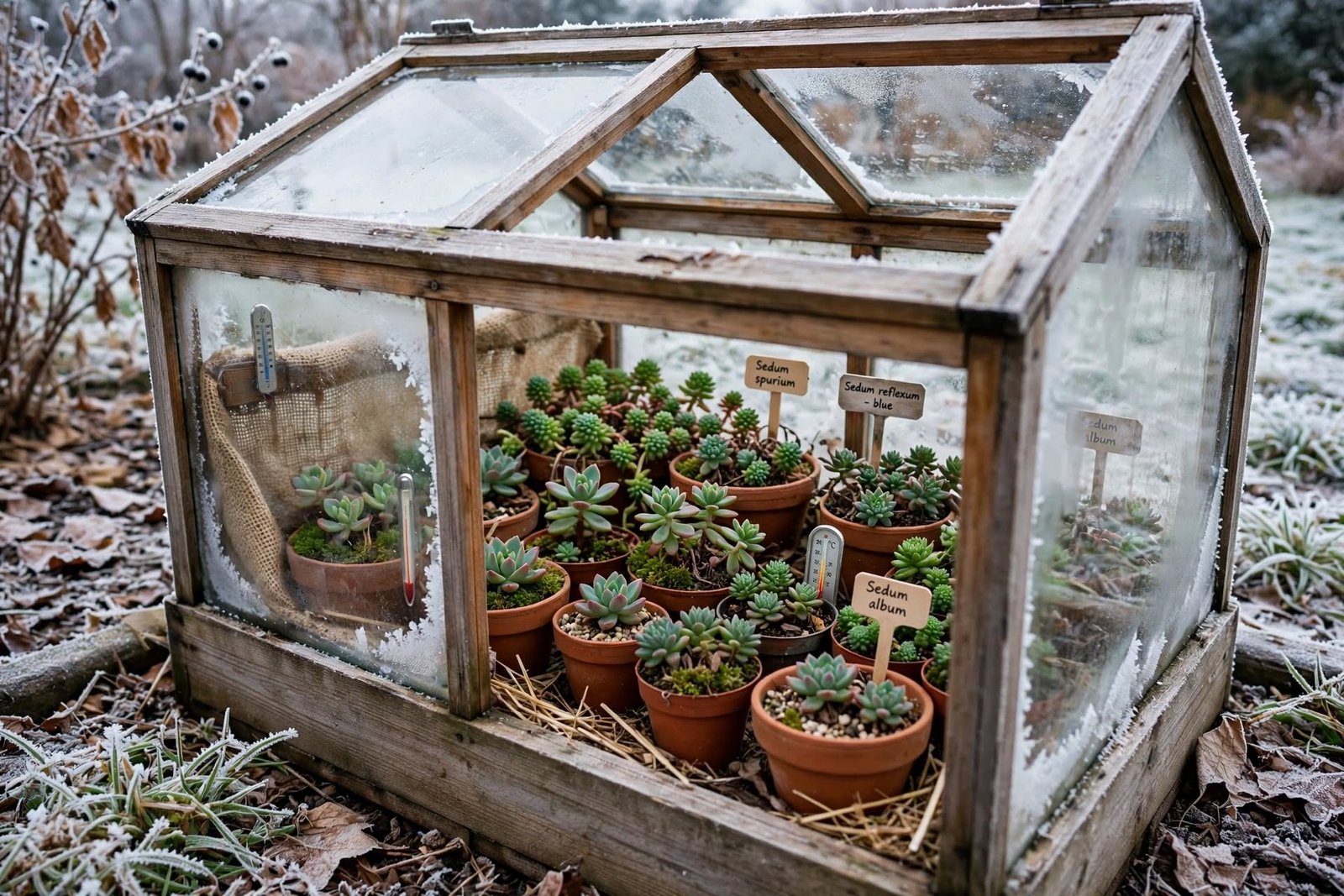
C) The Cold Frame / Mini-Greenhouse
A simple glass or polycarbonate box against the house. Keeps you 4-5°C warmer and, crucially, dry. Open the lid on sunny days, close at dusk. Line the bottom with straw. This is the classic solution for Sedums, Sempervivums and Echeverias across Central Europe.
D) The Dry & Gritty Mix — Prevention from the start
European winter kills wet roots. Repot champions in 50% grit, perlite or pumice + 50% compost. Terracotta pots breathe better than plastic. No saucers full of water in winter.
Your European Timeline
- Early October: Stop feeding. Reduce watering.
- Mid-October to early November: Move tender ones inside (check your local first frost date — early in Poland, late in Provence)
- November - February: Hardy pots stay outside wrapped + raised + dry
- Mid-March - April: Unwrap slowly. Don't put them from a dark room straight into blazing April sun — they sunburn.
These champions proved they can take extreme heat. With a little help, they'll prove they can take the cold too.
Now it's your turn.
We built Dreamscape Gardens from the ground up for this — to share real gardens, real experiences, not perfect catalogue photos.
Go to Blogs (Long articles) or Garden Moments (Short posts) and show us: What survived your summer? How do YOU protect yours? From Helsinki to Seville, share your garden champions, share your frost tricks, share your knowledge.
It all lives on Dreamscape.
— The Dreamscape Team